Discussion of "Interface metaphors" from the reading
Human Computer Interaction in Science Fiction Movies by Michael Schmitz (in French for the moment)
Les trois idées suivantes sont des idées de métaphores pour des interfaces "homme - machine".
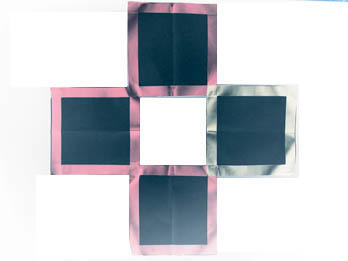
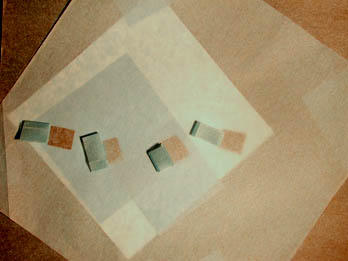
1. Les fenêtres constituent des surfaces planes sur lesquelles des images transparentes peuvent êtres affichées.
2. Le concept des poupées russes pourrait être utilisé pour consulter de l'information et créer des liens entre les différentes informations (importance, association, hierarchie).
3. Le rubicub. Le rubicub peut être manipulé dans de nombreuses directions.
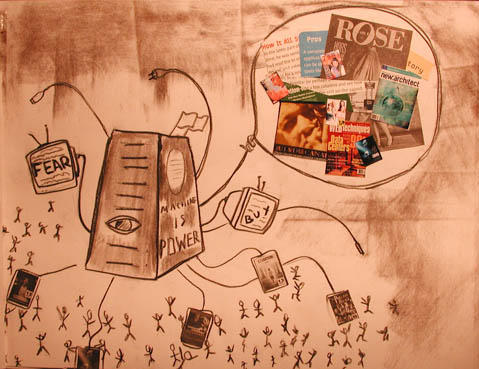
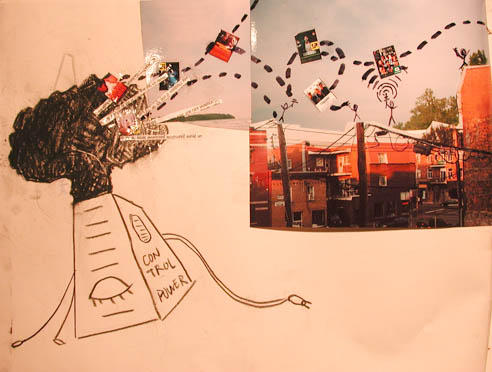
Les deux idées d'interfaces "homme - machine" suivantes sont inspirées de l'idée que l'information doit être "libre" et non pas contrôlée par des compagnies. Cette réflexion est inspirée du débat actuel sur la question de la vie privée et de la main mise de Google sur le Web.
4. Ecran d'eau
Un projecteur de petit taille projette sur un "écran d'eau" des informations provenant d'un ordinateur distant.
L'écran d'eau est une chute d'eau qui coule le long d'un mur en circuit fermé, tel les fontaines décoratives que l'on peut trouver dans certains hôtels. Des capteurs captent les vibrations infligées à l'eau, ce qui permet ainsi de situer quel parti du document a été sélectionné par l'utilisateur.
5. Ombres sélectives
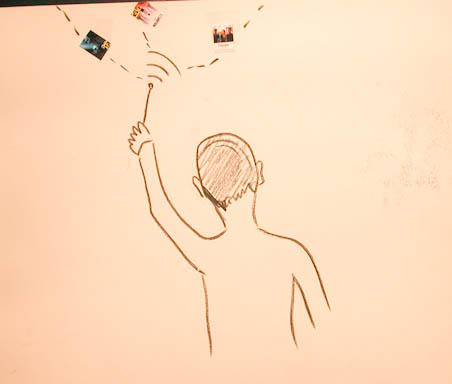
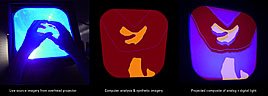
Le même type de projecteur que précédemment projette les informations sur n'importe quel type de surface. A l'aide de la lumière projetée et de ses mains (ou de baguettes) l'utilsateur créé des zones d'ombre sur l'écran. Un système informatique de vision analyse les mouvements des mains (ront, pointage, signe) et les traduits en opérations de sélection et manipulation de l'information projetée.
Cette idée est aussi inspiré du travail de Golan Levin avec "
The manual input session"